
The goal of The Solarhome Project was to develop and test a design of a simple but stylish modern house that was so energy efficient that it could be all electrically powered by solar panels and batteries alone, without the need of a grid connection, gas, oil, or wood for heating, cooking, or hot water, even in a relatively cold climate. The prototype of this design was built in northern Tasmania and was completed in 2017. It currently operates as an Airbnb, trading as Tamar Solarhome.
Although the design achieved all its goals, it turned out to be an expensive exercise, creating a beautifully comfortable, but relatively small home, which was difficult to build and few people could afford. So, the next goal was to use the same principles to develop a design of an easy-to-build small home which was as economical, durable, and energy-efficient as possible, while also being functional, stylish, and no bigger than necessary. And when correctly orientated (facing due north in the southern hemisphere), combined with at least double-glazed windows and airtight construction, it should require very little energy to be thermally comfortable throughout the year in most parts of Australia.
The design available for purchase on this website is a very affordable two-bedroom timber-framed house with fibre-cement sheet and hardwood external wall cladding, a 5-degree skillion roof suitable for corrugated steel, and an elevated timber-framed floor supported by galvanised steel posts, making it suitable for level, sloping, undulating, or poorly drained sites without requiring extensive earthworks. However, if preferred and more suitable for the site, it can be built on a concrete slab.
The simple floor plan and standard construction details ensure that it is easily buildable just about anywhere in Australia using readily available off-the-shelf materials and conventional construction techniques. It is dimensioned to accommodate standard-sized wall, floor, and roof sheets in easily handled sizes to minimise waste and labour. It is structurally designed in compliance with the SAA Light Timber Framing Code and, if required, can easily be modified to comply with local bushfire (BAL) regulations and cyclonic conditions.
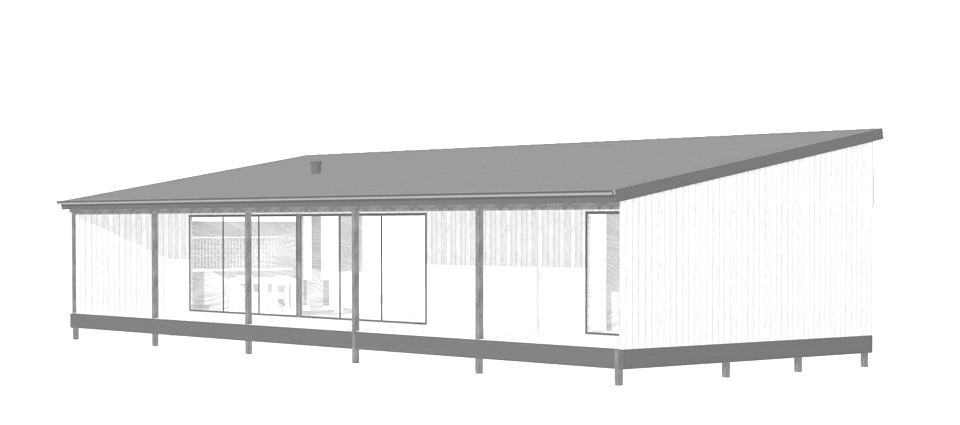
In summer, north-facing (southern hemisphere) glazing with a 2.4-metre roof overhang of the covered veranda plus side walls prevents direct solar access to the interior of the house when the summer sun is predominantly from the east, west, and directly overhead. With no glazing on the west and east walls, the house will remain relatively cool on even the hottest days. In winter, well-insulated walls, ceiling, and floor, and a compact design minimises heat loss so that the entire house can be kept warm with internal heat gains from occupants and appliances, with the assistance of solar gains from winter sun access when the midday sun is lower in the northern sky, plus a small heater if required.
Convection-driven exhaust vents (whirlybirds) provide continuous passive air movement at all times of the year as warmer air is constantly drawn upwards and out. In winter, with all doors and windows tightly shut, fresh air can be drawn in through an adjustable air vent in the floor under the heater. This continuous air movement will also help prevent internal condensation. However, the actual energy rating will depend on the R-value and airtightness of the windows and the specific insulation material used, plus the overall airtightness of the structure, which depends on the builder's attention to detail.
The design philosophy embraces simple modern minimalism, combined with the belief that houses built onsite, by local tradesmen, using locally purchased (and sourced, if possible) materials, can be more socially responsible, more attractive, and more affordable than factory-built prefabricated houses.